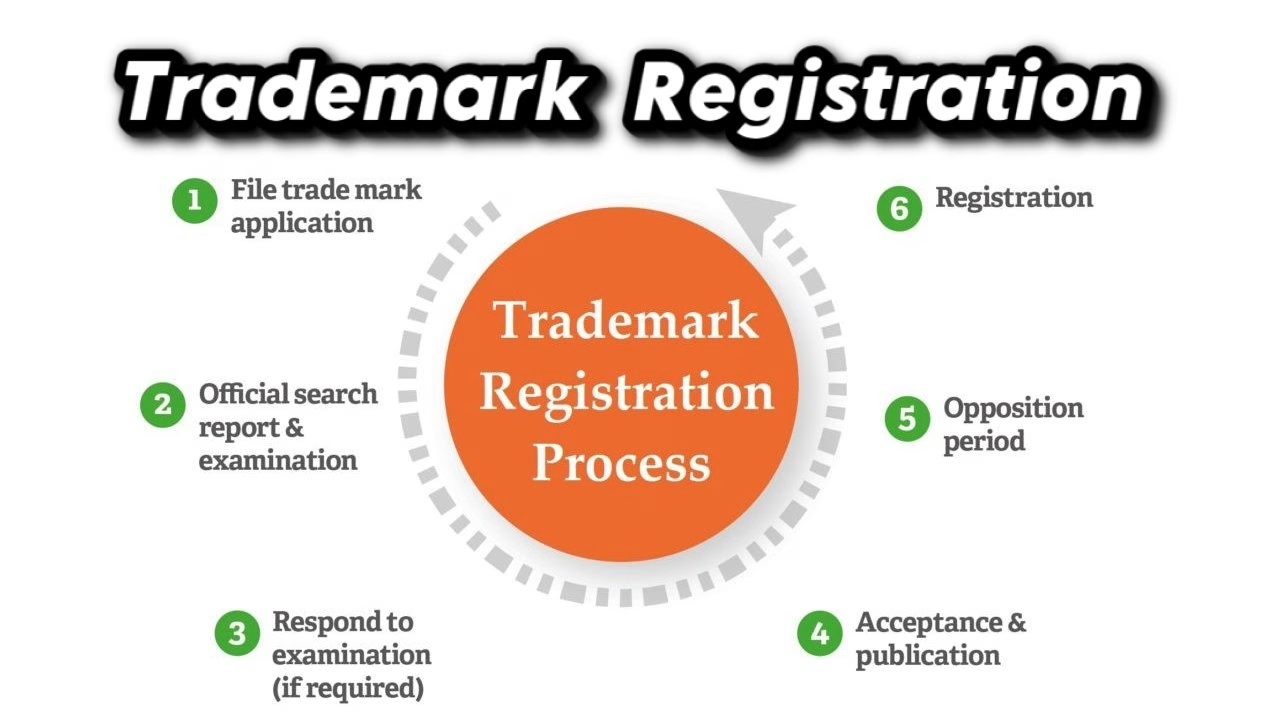
Trademarking a business name might sound overwhelming, but the process becomes manageable when broken into clear steps.
Below, we outline each stage, starting from your initial trademark search to maintaining your rights after registration. These steps will help you avoid legal pitfalls, save time, and secure your brand identity nationwide.
Step 1: Conduct a Trademark Search
Before filing your application, it is essential to confirm that your business name is unique and does not infringe on an existing trademark.
Skipping this step can lead to costly legal disputes, application denials, or the need to rebrand after investing in marketing. A thorough trademark search ensures you are starting with a name you can legally protect. For a deeper dive into the common pitfalls during this initial phase, read our guide on Common Mistakes to Avoid During Trademark Registration.
Trademark Search Checklist
| Task | Why It Matters | How to Do It |
| Search USPTO Database (TESS) | Identifies existing federal trademarks that may conflict with yours. | Use the USPTO Trademark Electronic Search System (TESS). Search for exact and similar names. |
| Check State Trademark Databases | Trademarks can be registered at the state level, creating conflicts. | Visit your state’s Secretary of State website and use their business or trademark search tool. |
| Review Domain Name Availability | Helps avoid branding conflicts and ensures online presence. | Search on domain registrars like GoDaddy or Namecheap for matching or similar domains. |
| Scan Social Media Handles | Ensures consistent branding across platforms. | Check username availability on platforms like Instagram, Facebook, and LinkedIn. |
| Consider Hiring a Trademark Attorney | Provides a comprehensive, risk-free search and legal advice. | An attorney can interpret search results and prevent costly mistakes in the application process. |
Step 2: Choose the Right Trademark Class
When filing your trademark application, you must specify the class of goods or services your business falls under. The U.S. uses the Nice Classification system, which includes 45 different classes.
Choosing the wrong class can lead to application delays, legal complications, or rejection.
Trademark Class Selection Guide
| Action | Why It Matters | How to Do It |
| Understand Trademark Classes | Classes define what products or services your trademark protects. | Review the USPTO Trademark ID Manual for the full list. |
| Identify Your Core Offering | Filing under the wrong class limits your protection. | Focus on your primary goods and services, not future plans. |
| Decide on Single or Multiple Classes | You may need more than one class for broader protection. | For example, a clothing brand may need Class 25 (Apparel) and Class 35 (Retail services). |
| Calculate Additional Costs | Each extra class adds to your filing fee. | TEAS Plus: $250 per class; TEAS Standard: $350 per class. |
| Seek Expert Guidance | Helps you avoid costly mistakes with classification. | Hire a trademark attorney or consult USPTO resources for clarity. |
Step 3: Prepare Your Trademark Application
Before you file, gather all the necessary details to ensure a smooth application process. Missing or incorrect information can cause delays or even lead to rejection.
This step is about making sure your application is complete, accurate, and ready for submission to the USPTO. For a general overview of the process, you can also review our guide on How to Register a Company Trademark.
Trademark Application Preparation Checklist
| Requirement | Why It Matters | How to Do It |
| Business Name | This is the word mark you want to protect. | Ensure it matches the name you use in commerce, exact spelling, spacing, and punctuation. |
| Logo or Design (Optional) | Needed if applying for a design mark. | Upload a clear digital image in JPG format that meets USPTO specifications. |
| Description of Goods and Services | Determines your trademark scope and classification. | Write a clear, accurate description using USPTO’s ID Manual. |
| Trademark Class | Required for proper categorization and protection. | Confirm your class from Step 2 to avoid errors or rejection. |
| Basis for Filing | USPTO needs to know why you are applying now. | Select either “Use in Commerce” (already using the name) or “Intent to Use” (plan to use it). |
| Applicant Details | Legal identity verification. | Provide the owner’s name, entity type (LLC, corporation), and business address accurately. |
Step 4: File with the United States Patent and Trademark Office (USPTO)
Once your application is ready, the next step is to submit it to the USPTO through their online filing system. This is where you officially request federal protection for your business name.
Filing correctly can save you from costly mistakes, delays, or even rejection.
| Action | Why It Matters | How to Do It |
| Access the TEAS Filing System | This is the official USPTO platform for trademark applications. | Visit USPTO TEAS and choose TEAS Plus or TEAS Standard. |
| Select Filing Option | The option you choose affects fees and requirements. | TEAS Plus: $250 per class (strict requirements). TEAS Standard: $350 per class (more flexible). |
| Complete Application Form | Ensures all required details are included for review. | Provide applicant info, mark details, goods and services description, and upload supporting documents. |
| Pay Filing Fee | The application will not be processed without payment. | Pay using a credit, debit card or USPTO deposit account. |
| Review and submit | Avoids errors that can delay your application or cause rejection. | Double-check spelling, classes, and attachments before submission. |
| Get Your Filing Receipt | Proof of application submission with tracking details. | Save the confirmation page and serial number for monitoring your application status. |
Step 5: Respond to USPTO Actions
After filing, your application enters the examination phase. A USPTO attorney will review it to ensure compliance.
During this process, you may receive Office Actions, official notices requiring clarification, additional documents, or corrections. Prompt responses are critical to avoid abandonment.
Managing USPTO Office Actions
| Action | Why It Matters | How to Do It |
| Understand the Review Process | Knowing what to expect reduces anxiety and prepares you for the next steps. | USPTO reviews applications within 8–12 months on average. |
| Check for Office Actions Regularly | Missing a response deadline can result in automatic denial. | Monitor your application status on the USPTO TSDR system. |
| Respond Promptly (6-Month Deadline) | USPTO requires a response within six months of the notice. | Submit responses online via the TEAS system. Address each issue clearly and thoroughly. |
| Address Common Issues | Many applications fail due to avoidable errors. | Clarify goods and services descriptions, resolve likelihood-of-confusion objections, or provide disclaimers. |
| Seek Professional Help If Needed | Complex Office Actions require legal expertise. | Hire a trademark attorney to craft a strong response and improve approval chances. |
Step 6: Monitor and Maintain Your Trademark
Registering your trademark is only the beginning. To keep your protection active, you must monitor for infringements and comply with USPTO maintenance requirements.
Failure to maintain your trademark can result in cancellation, leaving your brand vulnerable. This is especially important when considering the difference between a trademark and other forms of intellectual property, such as a copyright. For a detailed comparison, see our article on Trademark vs. Copyright: Everything Business Owners Must Know About Protecting Ideas and Brands in 2025.
Trademark Maintenance Checklist
| Action | Why It Matters | How to Do It |
| Monitor for Infringement | Protects your brand from unauthorized use by others. | Regularly search the market, online platforms, and the USPTO database for similar marks. |
| Renew Your Trademark | Federal trademarks require periodic maintenance to stay valid. | File Section 8 Declaration between years 5–6, and Section 9 Renewal every 10 years through USPTO TEAS. |
| Submit Proof of Use | USPTO requires evidence that you are actively using the mark. | Provide photos, labels, or promotional materials that show your trademark in commerce. |
| Watch Renewal Deadlines | Missing deadlines can lead to the cancellation of your trademark. | Set reminders well in advance of 5-year and 10-year maintenance periods. |
| Consider Using a Trademark Watch Service | Automates monitoring for potential conflicts or infringers. | Hire a legal service or subscription-based monitoring tool for ongoing vigilance. |
How Much Does It Cost to Trademark a Business Name?
The cost of trademarking your business name in the U.S. varies based on your filing method, the number of classes you register under, and whether you hire legal help.
Here is what you need to know about the potential expenses:
| Cost Component | Details | Estimated Amount |
| USPTO Filing Fees (TEAS Plus) | Lower-cost option with stricter requirements. | $250 per class |
| USPTO Filing Fees (TEAS Standard) | More flexible but higher cost per class. | $350 per class |
| Attorney Fees (Optional) | For professional help with searching and filing. | $500–$2,000 depending on complexity. |
| Additional Classes | Each extra class of goods or services adds to your filing cost. | $250–$350 per additional class |
| Maintenance Filings | Required to keep your trademark active after registration (e.g., Section 8 and 9 filings). | $225–$525 per filing |
If your business covers multiple industries, e.g., clothing and retail services, your costs will increase because each class requires a separate filing fee.
How Long Does It Take to Trademark a Business Name?
Trademark registration is not an overnight process. From the moment you file, it can take several months to over a year for full approval.
The timeline depends on the USPTO’s workload, the accuracy of your application, and whether any legal issues arise.
Trademark Registration Timeline
| Stage | What Happens | Estimated Timeframe |
| Initial USPTO Review | The application is assigned to an examining attorney. | 8–12 weeks |
| Examination Process | USPTO reviews the application for compliance and conflicts. | 3–6 months |
| Office Actions (If Issued) | Applicant responds to USPTO objections or requests. | Adds 1–6 months, depending on response |
| Publication in an Official Gazette | The public has 30 days to oppose your trademark. | 1 month |
| Final Approval & Registration | USPTO issues a registration certificate if no opposition arises. | 8–12 months total on average |
Applications with errors, incorrect classes, or Office Actions can push the process beyond a year. Hiring an attorney or filing correctly from the start can save significant time.
Conclusion
Trademarking a business name in the U.S. is a multi-step process that, while complex, is essential for securing your brand identity and legal protection. Success hinges on diligence, particularly in conducting a thorough initial search, accurately classifying goods and services, and responding promptly to the USPTO. By following this comprehensive guide, you can navigate the registration process effectively and ensure your valuable intellectual property remains protected for the long term.
Leave a Reply