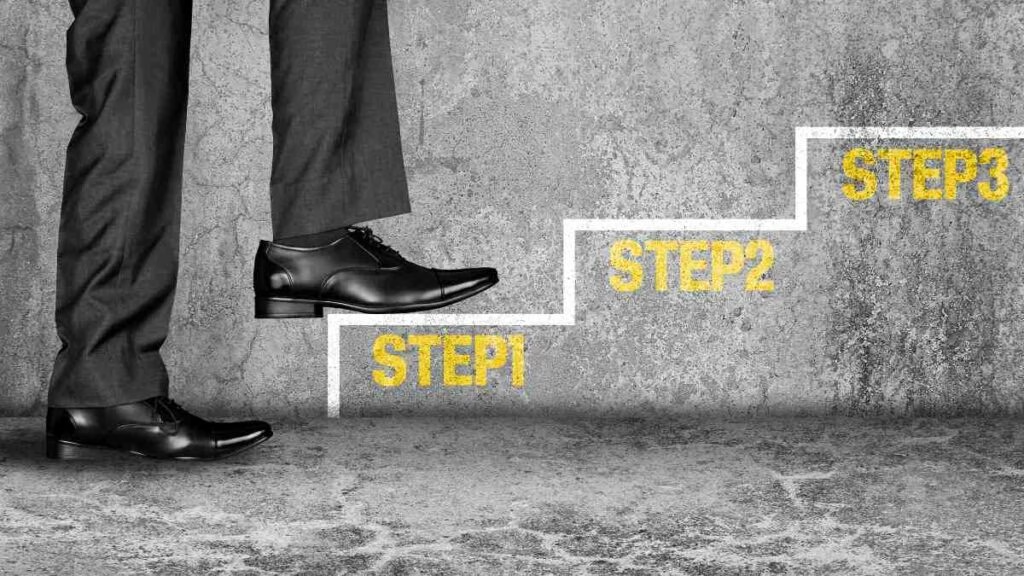
What are the steps to start a business?
I still remember the day I decided to start my first business. I was staring at a blank page, wondering if I had what it takes to make it work. I had no team and plan, just a dream and a deep desire to build something of my own. That was my first real step into entrepreneurship, and it marked the beginning of learning the hard way what the actual steps to start a business look like in the real world.
Since then, I’ve started multiple businesses. Some failed, some flourished. But each one taught me lessons no textbook ever could.
If you’re here, you’re probably thinking about starting your own business, or you’re ready to finally stop planning and start doing. Maybe you have an idea, maybe you just want more freedom. Either way, this guide is for you.
I’ll show you the real steps to start a business, practical, proven, and from experience. From validating your idea to marketing, funding, and scaling. This is a real-world guide to launching and growing a business that works. Ready? Let’s begin. You might also want to review frequently asked questions about steps to start a business to address common concerns early on.
Key Takeaways
- Starting a business takes more than an idea; it requires the right mindset, clarity of purpose, and the discipline to execute consistently.
- From finding a profitable idea to marketing, legal setup, funding, and growth, every step must be intentional and rooted in solving real problems.
- Systems, structure, and strategy, from branding and finance to hiring and compliance, are what turn your hustle into a sustainable business.
- Success doesn’t come from rushing; it comes from validating, launching smart, staying compliant, and scaling what works without burning out.
15+ Essential Steps to Start a Business
Here are the steps to start a business:
Step 0: Cultivate the Right Entrepreneurial Mindset
Before I started my first business, I thought I needed a great idea and maybe some capital. What I really needed was the right mindset.
Entrepreneurship is not a sprint. It’s a long, unpredictable road. And if you don’t have the mental stamina for it, even the best ideas can fall apart.
Self-discipline was my first lesson. In a 9–5, someone holds you accountable. In business, you have to show up daily, even when you’re tired, discouraged, or unsure. I’ve had to push through when nothing was working, and that consistency made all the difference.
Then, there’s risk tolerance. I’ve put money into ideas that didn’t work out. I’ve had to make big calls without all the answers. But with every failure, I became less afraid. The real risk is not trying at all.
Step 1: Discover a Business Idea That Solves a Real Problem
Every business I’ve started began with one question: what problem am I solving?
I have seen people chase random ideas, things that sounded trendy or looked profitable. But most of them fizzled out because they weren’t rooted in real needs.
The best business ideas solve real problems for real people. That’s where sustainability and money come from.
One method I’ve used is Ikigai, finding the sweet spot between what I love, what I’m good at, what people need, and what they’ll pay for. When those four align, you’ve got gold.
Another is pain-point mapping. Listen to people complain. What frustrates them? What’s too expensive, slow, or broken? That’s a business opportunity hiding in plain sight.
I also look inward, at my skills and experiences. What can I do well that others struggle with? One of my businesses came from me helping a friend with a task that turned out to be a common problem.
When you decide to start a business, don’t just focus on passion. Passion helps, yes, but knowing how to build and pursue your passions with confidence ensures you remain resilient when things get tough. You need something people will pay for, not just something you enjoy doing.
Step 2: Conduct Thorough Market Research
I once launched a product I was convinced people needed, only to watch it flop. Not because it wasn’t good, but because I didn’t do my homework. I assumed instead of researching.
That was the last time I ever skipped market research.
Before you build anything, you need to know who you’re building for, what they want, and how they’re currently solving that problem (if at all). This is where real validation begins.
I start by defining myideal customer, not just their age and gender, but their lifestyle, struggles, and goals. Then, I go where they hang out: online communities, forums, and social media comments. I look for patterns in their complaints, questions, and buying behavior.
I also check out competitors, not to copy them, but to find the gaps. What are people unhappy about? What’s missing from the current options? That’s where I position my offer.
Tools like Google Trends, AnswerThePublic, and Ubersuggest have helped me spot demand and keyword patterns. Even something as simple as a one-question Instagram poll or a quick Google Form can give you valuable insights.
Market research is not a one-time task. It’s an ongoing conversation with your audience. And trust me, it’s a lot cheaper to ask questions upfront than to launch blind and waste time, money, and energy fixing avoidable mistakes.
So don’t guess. Listen. Learn. Then build.
Step 3: Validate the Idea Before You Invest
Market research will point you in the right direction, but validation tells you if your idea actually works in real life.
I’ve had brilliant ideas that made perfect sense on paper, but when I tried to sell them? Crickets. No one paid, and no one cared. That’s when I realized: the only real validation is money, interest, or commitment from real people.
So now, before I pour in time or resources, I test.
Sometimes, I build a Minimum Viable Product (MVP) — a basic version of the offer. Other times, I create a landing page with a clear call to action: buy, sign up, or pre-order. If people are not willing to click or commit, that tells me everything I need to know.
One of my early wins came from offering a service casually on social media; this was a proven way to validate your business ideas with customers directly. Within a week, I had paying clients. No logo. No website. Just a solution people needed, clearly communicated.
You can also run pre-sales, test ads, or even mock up your product on platforms like Gumroad or Kickstarter. If people open their wallets, even before it exists, you’re onto something.
Learning how to validate your business idea before investing is not about getting everyone to say “yes”; it’s about finding a few people willing to take action. That’s the signal you need before going all in.
Trust me, it’s better to test small and adjust early than to build a masterpiece no one wants.
Step 4: Define Your Unique Value Proposition and Positioning
When I started my second business, I did everything “right”: decent product, functional website, competitive pricing. But it still didn’t click.
The reason? I blended in. I sounded like everyone else. People saw me… and moved on.
That’s when I learned the power of a clear value proposition and sharp positioning.
Your Unique Value Proposition (UVP) is the simple, compelling reason someone should choose you. It answers: What do you do? Who is it for? Why should they care?
For example, “I help first-time entrepreneurs launch profitable online businesses without tech overwhelm.” That’s clear, focused, and solves a specific problem.
When I defined my UVP properly, everything changed. My messaging became sharper. Clients started saying, “I feel like you’re speaking directly to me.”
Positioning goes deeper, it is about where you sit in the market. Are you premium or budget-friendly? Fast or thorough? Custom or one-size-fits-all? What makes you different from the rest?
Don’t try to be for everyone. That’s the fastest route to being forgettable.
Here’s what helped me:
- I studied my competitors’ reviews — the good and the bad
- I asked past clients why they chose me (or didn’t)
- I clarified what I stood for and what I didn’t
When you clearly define your value and claim your space, you stop chasing customers. They start recognizing you.
So, before you launch, ask: What makes my business the obvious choice for the right people? If you can’t answer that confidently, pause here. It’s worth getting right.
Step 5: Choose a Profitable Business Model
Early in my journey, I launched a business that made sales but hardly made money. I was working crazy hours and still barely breaking even. That’s when I realized: revenue IS NOT the same as profit, and a great idea still needs the right business model.
Your business model is how you create, deliver, and capture value. In simple terms, how you make money. The model you choose can make or break your entire business.
Over time, I’ve tried a few:
- Selling services (consulting, training)
- Selling digital products (courses, templates)
- Physical products (with fulfilment partners)
- Subscriptions and retainers
- One-time offers vs recurring revenue
Whatever you choose, make sure it’s profitable. Know your costs — time, money, and energy and price your offer to support growth, not just survival.
Don’t overcomplicate it. Choose one model, test it, and refine it as you go.
Step 6: Write a Solid Business Plan
I used to think business plans were just for banks and investors — long, boring documents no one ever reads. But after a few failed launches and messy growth spurts, I learned otherwise.
A good business plan is your map, and following a strong business plan sample for small business owners to follow helps you clarify your idea, spot blind spots, and prepare for what’s ahead; especially when you’re building something from scratch.
Step 7: Create a Go-To-Market Strategy
A solid business plan gives you a foundation. But your go-to-market strategy (GTM) is how you actually take your product or service into the world and get people to pay attention.
I once launched without a GTM plan, just a website, some social media posts, and hope. That launch fell flat. Not because the idea was bad, but because I didn’t plan how to generate demand.
Now, I treat launching like an event, not just a moment. I build up to it.
A good GTM strategy answers:
- Who is my target audience?
- Where do they hang out (online or offline)?
- How will I reach them, educate them, and convert them?
Start by building anticipation. Share behind-the-scenes content. Involve your audience in decisions (like picking a name or logo). Offer early access, bonuses, or limited spots.
When I launched my last offer, I used an email waitlist, mini-trainings, and sneak peeks to warm up my audience. By the time I opened the doors, people were ready to buy.
Your GTM plan can include:
- Email campaigns (build your list early)
- Social media storytelling
- Collaborations with micro-influencers or communities
- Referral or affiliate offers
- Launch events (virtual or physical)
Take your time to plan it. A strong launch sets the tone for everything that follows.
Step 8: Choose Your Legal Business Structure
This is the part I used to avoid. Legal stuff felt confusing, overwhelming, and, frankly, a little boring. But after navigating tax issues, missed opportunities, and a painful re-registration that cost me time and money, I learnt the hard way that this step matters.
Your legal structure affects everything, from how you’re taxed to how investors see you and even how protected you are if things go sideways.
Here are the most common structures I’ve considered or used across my businesses:
Sole Proprietorship
Simple to set up, low cost, and perfect for solo entrepreneurs starting small. But you and your business are the same legal entity, which means no separation between your personal and business liabilities.
Limited Liability Company (LLC) or Private Limited Company
My personal favorite. It offers flexibility and protects your personal assets if anything goes wrong. It’s a bit more complex, but it gives you credibility, and investors prefer it, too.
Partnership
Useful if you’re going into business with someone else. But trust me, get everything in writing. Use contracts to define roles, contributions, and what happens if one person wants out.
Corporation (or PLC)
More relevant if you plan to go big, raise major capital, or list publicly down the line. If you’re just starting, you probably won’t need this yet.
Your legal structure is more than paperwork, it is how you protect your business, build credibility, and prepare for growth. Don’t skip it. Don’t guess.
Step 9: Register Your Business and Stay Legally Compliant
I remember the first time I tried to register a business — I had no idea what I was doing. Between paperwork, tax requirements, and choosing the right name, it felt like a maze. I made mistakes, delayed the process, and finally outsourced the process.
That’s why I always say: register your business properly from the start and stay compliant. It’s not just about formality. It’s about building something legitimate and future-ready.
Here’s what I now do and what I recommend:
1. Register the Business Legally
Depending on your country, this could be with CAC (in Nigeria), Companies House (UK), or your state agency (U.S., Canada, etc.). It’s the step that gives your business official status, tax IDs, and legal rights.
2. Secure the Right Licenses and Permits
Depending on your industry, you might need specific operating permits like health certifications, professional licenses, or sector-specific approvals. Don’t wait for trouble before getting them.
3. Register for Taxes
This part scared me at first, but tax registration keeps you on the right side of the law and opens doors for loans, grants, and corporate contracts. I use an accountant or consultant to keep it clean and simple. Be sure to understand the documents required for annual returns filing to avoid penalties down the line. If you operate locally, a step-by-step guide to filing company annual returns in Nigeria can be invaluable.
4. Protect Your Name and Intellectual Property
Register your brand name, domain, and trademarks. I’ve seen people lose years of brand-building because they didn’t lock in their identity early, which is one of the common mistakes entrepreneurs make with IP protection.
Bottom line? Compliance builds trust. It’s not just about avoiding penalties, it shows your customers, partners, and even investors that you mean business. To fully safeguard your assets, you should also understand the difference between trademark and copyright, and everything business owners must know about protecting ideas and brands in 2025.
Step 10: Set Up Smart Financial Systems
In my early days, I made a rookie mistake, mixing my personal and business finances. I’d swipe the same card for groceries and business tools, had no clue what I was earning, and tax season? A nightmare.
That chaos taught me fast: you don’t need to be a finance expert, but you do need systems.
Here’s what I now set up for every new business and what I recommend you do, too:
1. Open a Dedicated Business Bank Account
The moment you register your business, open a separate account. It helps with tracking income, controlling expenses, and staying accountable. It also makes your business look more credible to clients, investors, and even grant bodies.
If you’re in Nigeria or planning to operate in Nigeria, most banks now offer SME-focused accounts with online banking options. Fintech solutions are also emerging for digital businesses.
2. Use Basic Bookkeeping Tools
You don’t need fancy accounting software on day one, but you do need visibility. I started with Excel sheets, then moved to Wave as we scaled.
Track:
- Revenue
- Expenses
- Profit margins
- Cash flow
You’d be surprised how many small businesses fail because they can’t manage cash, not because the idea was bad.
3. Prepare Legal and Payment Systems
If you’re hiring or working with freelancers, protect yourself with contracts, NDAs, and onboarding templates that saves you hours (and legal stress).
Also, set up your invoicing and payment gateways. You can use Paystack, Flutterwave, Stripe, or PayPal; make it easy for customers to pay you.
Don’t wing your finances. Financial clarity builds confidence in you and in your business.
Step 11: Build a Brand Identity
Branding is how people feel about your business when you’re not in the room. And when you’re just starting out, your brand identity can either draw people in or make you blend into the noise.
Start With Your Brand Essence
Before choosing colors or fonts, I ask myself:
- What do I want people to feel when they interact with my business?
- What values do I stand for?
- Who exactly am I speaking to?
One of my businesses took off not because I had a better product but because I communicated with honesty, clarity, and a tone that matched my audience.
Choose Visual Elements That Reflect You
When I rebranded a previous startup, I used Canva Pro — an affordable, powerful tool that helped me build a consistent visual identity without needing a design agency.
What you need:
- A great logo
- Consistent color palette
- Clean typography
- Branded templates (for social media, documents, presentations)
And, of course, your domain name and email address should match your brand. Nothing says “amateur” like a business using personal Gmail for client communications.
Build a Simple Brand Kit
You don’t need to go full corporate. Just document your key elements — tone of voice, logo use, brand colors, and image style so everything you create looks and sounds like you.
When you’re clear on your identity, people trust you faster. They remember you. And in a crowded marketplace, that’s half the battle.
Step 12: Develop a Winning Marketing Strategy
When I launched my first business, I thought posting on social media now and then would be enough. I quickly realized; marketing is not what you do after you build your product. It’s what determines whether your product ever gets seen.
Marketing is simply telling the right people that you exist in a way that makes them care. And if you do it right, it drives sales, trust, and loyalty.
Now, I always start by understanding who I’m speaking to. I create simple customer profiles — what they want, where they hang out, what frustrates them. It helps me tailor my message so it lands with the right people.
Then, I pick channels that match both my strengths and my audience. If I love writing, I lean into blogs, emails, and SEO. If I’m more visual, I go for Instagram, YouTube, or Reels. There’s no one-size-fits-all; you just need to be where your audience already is.
Step 13: Build Your Digital Assets
I’ve seen great businesses fail simply because no one could find them online. In today’s world, your digital presence is not optional; it’s your storefront, even if you don’t sell physical products.
The first digital asset I always create is a website. It doesn’t have to be fancy. In fact, my most successful site started as a single landing page. What matters is that it’s clean, fast, and tells visitors what you do, how you can help them, and how they can reach you.
You can use WordPress, Wix, and Shopify, depending on the type of business. For service-based businesses, WordPress gives flexibility. For product sales, Shopify is hard to beat.
Next, I secure my domain name and matching email address. That one move makes a business feel 10x more professional. I can’t count how many clients said, “You looked legit, so I trusted you.”
Then, I set up my social media platforms, but I only focus on the ones that matter. There is no need to be everywhere. Just be active where your audience already spends time.
Step 14: Fund Your Business
Most people don’t start because they feel they need a huge chunk of capital to get moving. That belief has kept many stuck longer than they will care to admit. I know you don’t always need big money; you need a smart funding strategy.
I’ve bootstrapped businesses with almost nothing and have seen entrepreneurs raise funds through clients, partnerships, and small grants. What mattered most wasn’t how much, but how creatively and wisely it was used.
Then, explore your options:
- Self-funding: This is how I started. I saved, reinvested revenue, and kept costs low.
- Family and friends: This is not always easy, but possible if you’re transparent and treat it like a real deal.
- Grants and competitions: I’ve seen people apply for and win grants that gave them breathing room in the early days.
- Crowdfunding: Platforms like Kickstarter or GoFundMe work well if you’ve got a passionate community or a product with mass appeal.
- Angel investors and venture capital: These are ideal if you’re building something scalable with big market potential — but it comes with expectations.
No matter how you choose to fund your business, start small, stay lean, and build proof of concept. Investors and grant bodies are far more likely to back you if you’ve already done something with what you have.
Step 15: Hire Smart and Build a Power Team
When I started, I tried to do everything myself. I was the founder, marketer, designer, customer support, and accountant — all rolled into one. It worked for a while… until it didn’t.
I burnt out.
That’s when I realized you can’t build a serious business alone. At some point, you’ll need help, whether it’s a team, a co-founder, or reliable freelancers who take weight off your shoulders.
But here’s the thing: hiring too early or hiring wrong can be expensive. I’ve made that mistake, too. So now, I follow a simple rule: delegate what drains meand double down on what moves the business forward.
Step 16: Launch with Confidence
This is the moment everything becomes real, your product is ready, your systems are in place, and you’re about to go live. I’ve launched businesses that felt exciting and others that nearly broke me. What was the difference? Preparation and presence.
One thing I’ve learnt: a launch is not just about the day you go public; it’s a process. I now start building interest at least two to four weeks before the actual launch. I tease the offer, share the journey, invite feedback, and create a bit of mystery. People love being part of something new.
My best launches always had one thing in common: a warm audience. I’d already built a mailing list, shared value, answered questions, and involved my community in the process. So, when it came time to launch, they weren’t surprised; they were ready.
I’ve done soft launches with just a handful of early adopters and full-blown campaigns with ads, webinars, and influencer support. There’s no single formula, but here’s what I always check before hitting “go”:
- Is my website or sales page ready?
- Are my emails and posts scheduled?
- Do I have a clear offer and call to action?
- Can I handle demand, even if it’s small at first?
Also, expect something to go wrong. It’s normal. My first course launch had a broken checkout link. Another time, my email automation didn’t fire. I fixed it, owned it, and kept going.
And when the first sale comes in, celebrate. Seriously. That moment is proof that you’ve created something someone values.
Step 17: Monitor, Optimize, and Scale
After your launch, it’s tempting to take a deep breath and just let things run. I’ve done that, and it cost me. Because launching is just the beginning. What really matters is what you do next.
Every successful business I’ve built had one thing in common: I kept checking what was working and what wasn’t, then made changes fast.
At first, I used to guess. Now? I use data. Tools like Google Analytics, Hotjar, or even Instagram Insights have helped me understand where people drop off, what content converts, and which offers hit the mark.
But metrics alone aren’t enough. I constantly ask customers for feedback. I send short surveys, track reviews, and pay attention to the questions people keep asking. That feedback often led to some of my most profitable pivots.
Once I know what works, I look at how to automate, delegate, or scale it.
I automate emails, content scheduling, and client onboarding. I delegate tasks that no longer need my hands. And I scale the parts of the business that are profitable and sustainable, not just exciting.
Scaling doesn’t mean doing everything at once. It means doing more of what works, with systems that don’t burn you out. Sometimes, that means launching new products. Other times, it’s entering a new market or licensing your method.
Optional Power Moves (If You Want to Be World-Class)
Once your business is running, these extras might not feel urgent, but they are what separate the average from the exceptional. I didn’t focus on these in my early days, but looking back, I wish I had.
1. Plan Your Exit Early
Whether you are building to sell, hand over, or automate, having a clear exit strategy from the start gives your business direction. I now ask myself: Could this run without me? If not, I build with that in mind.
2. Build with Purpose
Businesses that make money and make a difference last longer. I look for ways to embed sustainability and social impact, fair hiring practices, eco-friendly sourcing, or giving back to my community. It’s good business and great branding.
3. Protect What You’re Building
If you’re serious, get insured. Depending on your industry and location, that could mean liability insurance, cyber protection, or product cover. The peace of mind is worth every penny.
These are not must-dos for day one, but they’re the kind of moves that future-proof your business and help you play a bigger game.
Conclusion
Build it like you mean it. I’ve started businesses with zero funding, businesses that failed, and businesses that changed my life. Through it all, I have learnt that starting a business is not about having everything figured out; it’s about having the courage to start and the discipline to keep going.
If you’ve made it through this guide, then you’re not just curious; you’re serious. You now understand that the steps to start a business go far beyond just having an idea. It’s about mindset, strategy, systems, structure, and, above all, execution.
No two journeys look the same, but every successful one begins with that first, intentional step.
Leave a Reply