
Nigeria is a landscape teeming with opportunities, innovation, and an ever-growing young population ready to create value. The dream of owning a business in Nigeria is held by millions, yet the actual process can often seem daunting, shrouded in bureaucratic mystery and complex jargon. However, simplifying the journey into concrete, manageable steps reveals a clear path to successful business ownership.
This article demystifies the process, breaking down the launch into five essential stages. While the entrepreneurial journey is inherently complex, approaching it systematically, armed with the right information and a focused mindset, significantly increases your chances of success. It begins not just with capital, but with passion. Before you even draft your first business plan, ensure that your venture aligns with your core motivations and long-term goals. Taking the time to understand how to build and pursue your passions with confidence will provide the necessary fuel to navigate the inevitable challenges of the business world.
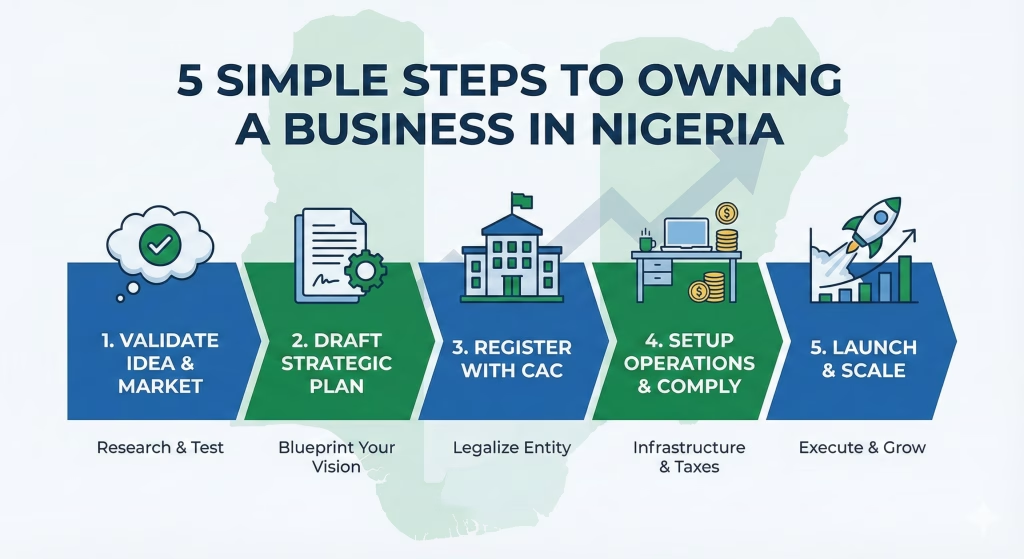
Step 1: Idea Validation and Market Analysis
The foundational error many aspiring entrepreneurs make is falling in love with an idea before validating its commercial viability. An excellent business idea solves a genuine problem or fulfills an unmet need in the market. In Nigeria, where diverse local realities dictate consumer demand, thorough market analysis is non-negotiable.
Conducting Market Research
Your initial investigation should cover three critical areas:
- Problem Identification: What specific pain point are you solving for your target customers?
- Competitor Analysis: Who else is offering a similar solution? What are their strengths and, more importantly, their weaknesses (the gaps you can fill)?
- Target Audience Definition: Who, precisely, will pay for your solution? You must define your ideal customer demographic, location, and spending power.
Proving Your Concept
Don’t wait for a perfect product or service to test the waters. The goal is to prove, as quickly and cheaply as possible, that customers are willing to exchange money for your proposed solution. This involves creating a Minimum Viable Product (MVP) or conducting pilot sales.
The discipline of validating your concept before making substantial investments is a hallmark of successfully starting a small business in Nigeria. You should master the proven way to validate your business ideas with customers to ensure your capital is focused on a viable opportunity rather than a mere speculation. This essential step reduces risk and helps you pivot early if the market response is lukewarm.
Step 2: Drafting a Strategic Business Plan
Once you have a validated idea, the next critical step is formalizing your vision into a comprehensive strategic document: the business plan. In the Nigerian context, this plan is not merely a formality for banks or investors; it is your operational blueprint and financial guardrail.
Components of a Robust Plan
A solid business plan typically includes:
- Executive Summary: A concise overview of the entire plan.
- Company Description: Legal structure, mission, and vision.
- Products/Services: Detailed description of your offering and its unique selling proposition (USP).
- Market Analysis: Deep dive into the data collected in Step 1.
- Marketing and Sales Strategy: How you will reach, acquire, and retain customers.
- Operational Plan: Physical location, equipment, and required personnel.
- Financial Projections: The most critical component. This must include projected cash flow statements, profit and loss statements, break-even analysis, and funding requirements.
Even if you are self-funding, drafting a detailed financial projection forces you to confront the realities of costs, pricing, and profitability. For guidance on structuring this vital document, consider reviewing a business plan sample for small business owners to follow. A clear, well-researched plan turns ambition into achievable action steps.
Step 3: Legal Registration and Formalization via CAC
This is arguably the most crucial formal step to owning a business in Nigeria: legalizing your entity through the Corporate Affairs Commission (CAC). Formal registration is paramount for credibility, accessing finance, securing contracts, and—most importantly—separating business liability from personal assets.
Choosing the Right Legal Structure
The CAC offers different registration types, each with distinct legal and tax implications:
- Business Name (Sole Proprietorship or Partnership): Simpler and cheaper, but the owners’ personal assets are not legally separate from the business debts (unlimited liability).
- Limited Liability Company (LTD or PLC): Requires more documentation and higher fees but offers limited liability protection, meaning the personal assets of the owners are protected from business debts. This is the recommended structure for serious ventures planning to scale.
- Incorporated Trustees: Used primarily for non-profits, religious bodies, and charitable organizations.
The Registration Process
The process typically involves:
- Name Availability Search: Checking if your desired name is available and reserving it.
- Documentation: Preparing necessary documents like the memorandum and articles of association (for LTDs), statutory declaration, and passport photographs of directors/proprietors.
- Filing: Submitting the application and paying the required fees.
Understanding the benefits of registering your business with the Corporate Affairs Commission (CAC) will underscore why this step is worth the time and expense. Without CAC registration, your business lacks the formal recognition required to operate fully within the Nigerian economy, especially when dealing with banks and large organizations.
Step 4: Operational Setup and Regulatory Compliance
With your business legally registered, the focus shifts to creating a functional, compliant operational base. This involves setting up your financial infrastructure and adhering to local and federal regulations.
Financial Infrastructure
- Corporate Bank Account: Open a bank account in your business’s registered name. This is critical for maintaining financial transparency, separating personal and business finances, and facilitating business transactions.
- Tax Identification Number (TIN): Obtaining a TIN from the Federal Inland Revenue Service (FIRS) is mandatory after CAC registration. This is essential for paying taxes, customs duties, and dealing with government agencies.
- Local Permits: Depending on your business location and type (e.g., retail, food service), you may need specific permits or licenses from the local government council (LGA).
Navigating Compliance
Compliance is an ongoing responsibility that protects your business from penalties and ensures its longevity. This includes:
- Tax Remittance: Paying VAT, Company Income Tax (CIT), and Pay As You Earn (PAYE) for employees.
- Annual Filings: Businesses are required to file statutory returns annually with the CAC and tax authorities. Understanding the requirements, such as the frequently asked questions on filing annual returns in Nigeria, is vital to maintain your registration status and legal standing. Neglecting annual returns can lead to heavy fines or even the striking off of your business name.
Step 5: Launch, Marketing, and Scaling
The final simple step is the one that brings your vision to life: launching your product or service. This phase demands strategic execution, relentless marketing, and an iterative approach to growth.
Strategic Launch
Decide on your launch strategy: a soft launch to a small, controlled group for feedback, or a grand launch with significant marketing spend. Your choice should be dictated by the nature of your product and the budget outlined in your business plan.
Marketing and Sales
In the digital age, a robust online presence is non-negotiable. Invest in:
- Digital Marketing: SEO, social media marketing, and targeted online advertising.
- Content Creation: High-quality content builds trust and authority.
- Networking: Building strategic alliances and partnerships within your industry.
The Growth Trajectory
After a successful launch, focus on scaling the business sustainably. This involves:
- Customer Relationship Management (CRM): Turning first-time buyers into repeat customers.
- Financial Management: Continually monitoring your key performance indicators (KPIs) against your projections.
- Team Building: Hiring and retaining top talent who share your vision.
The initial five steps simplify the regulatory and foundational requirements, but the true journey of entrepreneurship involves continuous learning and adaptation. To gain a broader perspective on the ongoing commitment required for success beyond the registration phase, a comprehensive resource detailing 15 proven steps to start a business for success can serve as your long-term guide.
Conclusion
Owning a business in Nigeria is a journey of calculated risks, diligent paperwork, and unwavering commitment. By mastering these five simple steps, from validating your idea to securing your legal foundation and finally launching, you move past the initial barriers to entry. The Nigerian market rewards those who are prepared, compliant, and strategic. Start smart, stay compliant, and build a legacy.
Leave a Reply