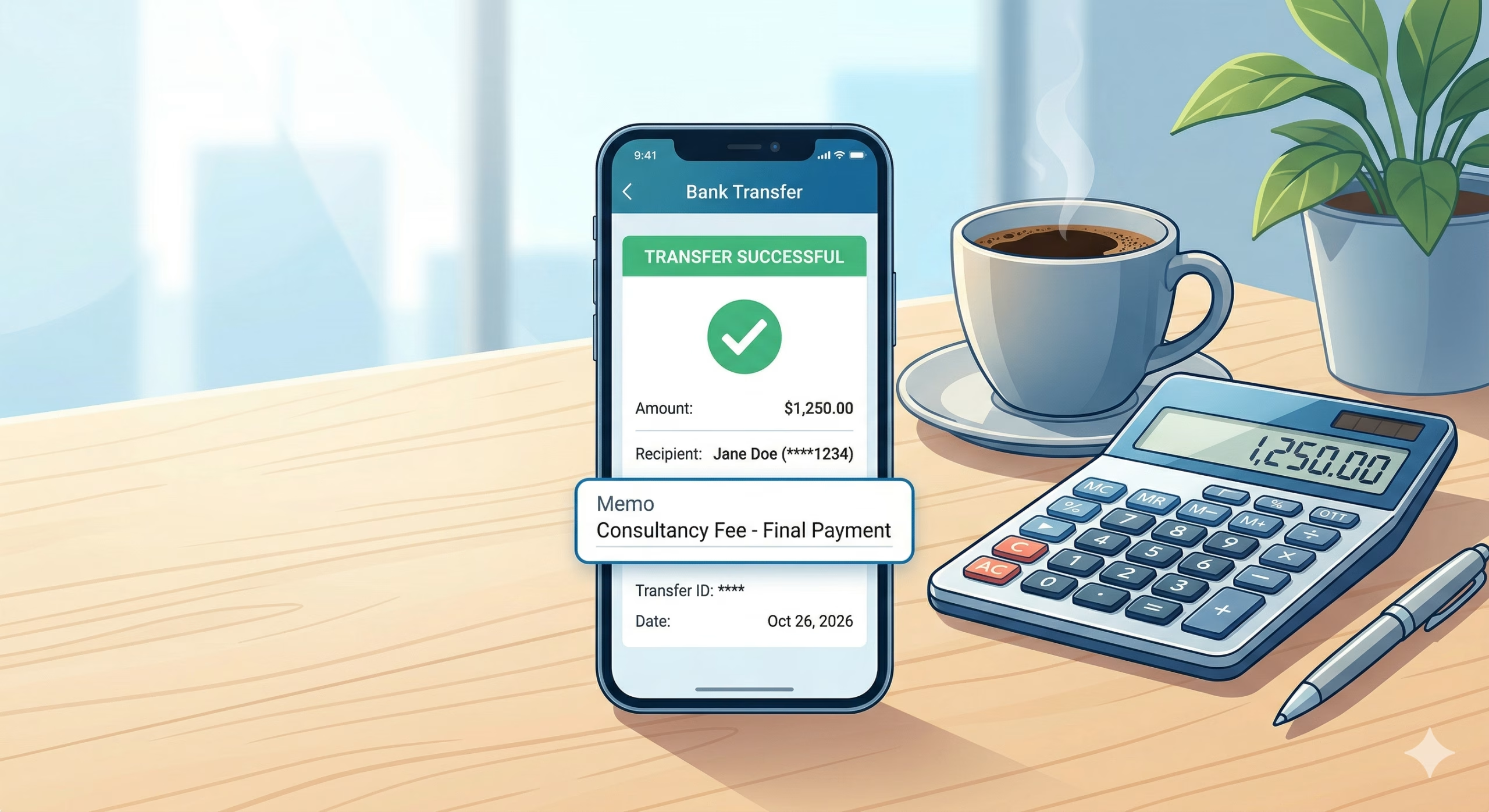
One of the most visible, day-to-day impacts of the Nigeria Tax Act 2025 is the reclassification and clarification of charges on electronic bank transfers.
As circulated by most financial institutions, the reform does not introduce a new charge on transfers; instead, it redefines, standardizes, and reallocates responsibility for an existing levy with effect from 1 January 2026.
If you haven’t, read part 1 and part 2 of the three-part Nigeria tax reform series for a comprehensive understanding of the reform.
From EMTL to Stamp Duty: What Has Changed?
Under the new tax framework, the ₦50 Electronic Money Transfer Levy (EMTL) is now formally treated and applied as Stamp Duty across all financial institutions.
This change brings electronic transfers fully under the stamp duties regime, aligning bank charges with the broader stamp duty reforms introduced by the Act.
In practical terms, customers may still see a ₦50 charge on qualifying transfers, but their legal basis, application rules, and liability have changed.
Key Changes to Electronic Transfer Charges
| Area | Previous Treatment (EMTL) | New Treatment Under the Tax Act |
| Legal classification | Electronic Money Transfer Levy (EMTL) | Stamp Duty |
| Threshold | Applied to qualifying transfers | Applies to transactions of ₦10,000 and above |
| Who bears the charge | Beneficiary or receiver | Sender of the transfer |
| Exempt transactions | Limited clarity | Salary payments and intra-bank self-transfers are exempt |
| Application across banks | Sometimes inconsistent | Standardised across all financial institutions |
Transactions Subject to Stamp Duty
Under the new rules, Stamp Duty applies to electronic transfers of ₦10,000 and above, or the foreign-currency equivalent, carried out through banks and other financial institutions.
This includes:
- Inter-bank transfers
- Transfers to third parties
- Digital and electronic payment channels processed by banks
Transactions Now Explicitly Exempt
The reform also provides clearer exemptions, addressing long-standing customer complaints:
- Salary payments are exempt from stamp duty
- Intra-bank self-transfers (transfers between accounts held by the same customer within the same bank) are exempt
These exemptions reduce friction for routine personal and payroll transactions.
The Most Notable Shift: Who Pays the Charge
A key operational change is that the sender now bears the stamp duty charge, not the recipient.
Previously, the levy was often deducted from the beneficiary’s account, which caused confusion and disputes. Under the new framework, the cost is transparently charged to the initiating party.
What Account Holders and Businesses Should Do
Individuals should review how routine transfers are structured, particularly where multiple high-value transfers are made daily.
Businesses should update payment policies, especially for bulk payments, vendor transfers, and treasury operations, to reflect that stamp duty is now a sender-side cost.
How to Use Bank Transfer Narrations Under the New Tax Regime
As Nigeria’s tax system becomes more data-driven and digitized, bank transaction narrations are no longer a casual afterthought.
Under the 2025 tax reform, electronic transfers are more closely monitored, cross-checked, and analyzed as part of broader compliance efforts.
Clear, accurate narrations now play a critical role in explaining the nature of transactions and reducing the risk of misclassification or unnecessary tax scrutiny.
Why Bank Narrations Matter More Than Ever
With the introduction of unified tax IDs, mandatory e-invoicing, and real-time transaction monitoring, tax authorities can more easily link bank inflows to individuals and businesses.
Where a transaction lacks context, it may be interpreted as taxable income by default, especially if it is recurring or high in value.
Simple, honest narrations help distinguish between:
- taxable income and non-taxable receipts
- personal transfers and business revenue
- one-off inflows and regular earnings
Best Practices for Bank Transfer Narrations
The guiding rule is straightforward: always state the true nature of the transaction, clearly and consistently.
1. Gifts and Personal Transfers
Where money is sent as a gift or personal support, the narration should explicitly state this.
Recommended narrations:
- “Gift from family.”
- “Personal gift.”
- “Birthday gift.”
Avoid vague terms such as “transfer” or “support,” which provide no context.
2. Refunds and Reimbursements
Refunds, whether personal or business-related, should be clearly identified to avoid being mistaken for income.
Recommended narrations:
- “Refund for overpayment.”
- “Expense reimbursement”
- “Customer refund.”
This is especially important for freelancers and businesses that frequently receive repayments.
3. Savings and Internal Transfers
Money moved between personal accounts or set aside as savings should be clearly labeled.
Recommended narrations:
- “Personal savings transfer.”
- “Transfer to savings account.”
- “Internal account transfer”
This helps distinguish internal movements of funds from fresh income.
4. Business Income and Payments
For businesses, narrations should match the nature of the transaction and align with invoices or contracts.
Recommended narrations:
- “Payment for web design services – Invoice 023”
- “Consulting fee—March 2026”
- “Product sales proceeds”
Consistency between narrations, invoices, and accounting records is critical under the new compliance framework.
What to Avoid
- Generic narrations such as “payment,” “transfer,” or “cash”
- Misleading descriptions that do not reflect the true nature of the transaction
- Inconsistent narrations for similar transactions
These practices increase the risk of queries, audits, or misclassification during tax reviews.
What Individuals and Businesses Should Do
Individuals should develop the habit of adding accurate narrations to every significant transfer, even for personal transactions.
Businesses should standardize narration formats across staff, vendors, and clients to ensure consistency.
Leave a Reply