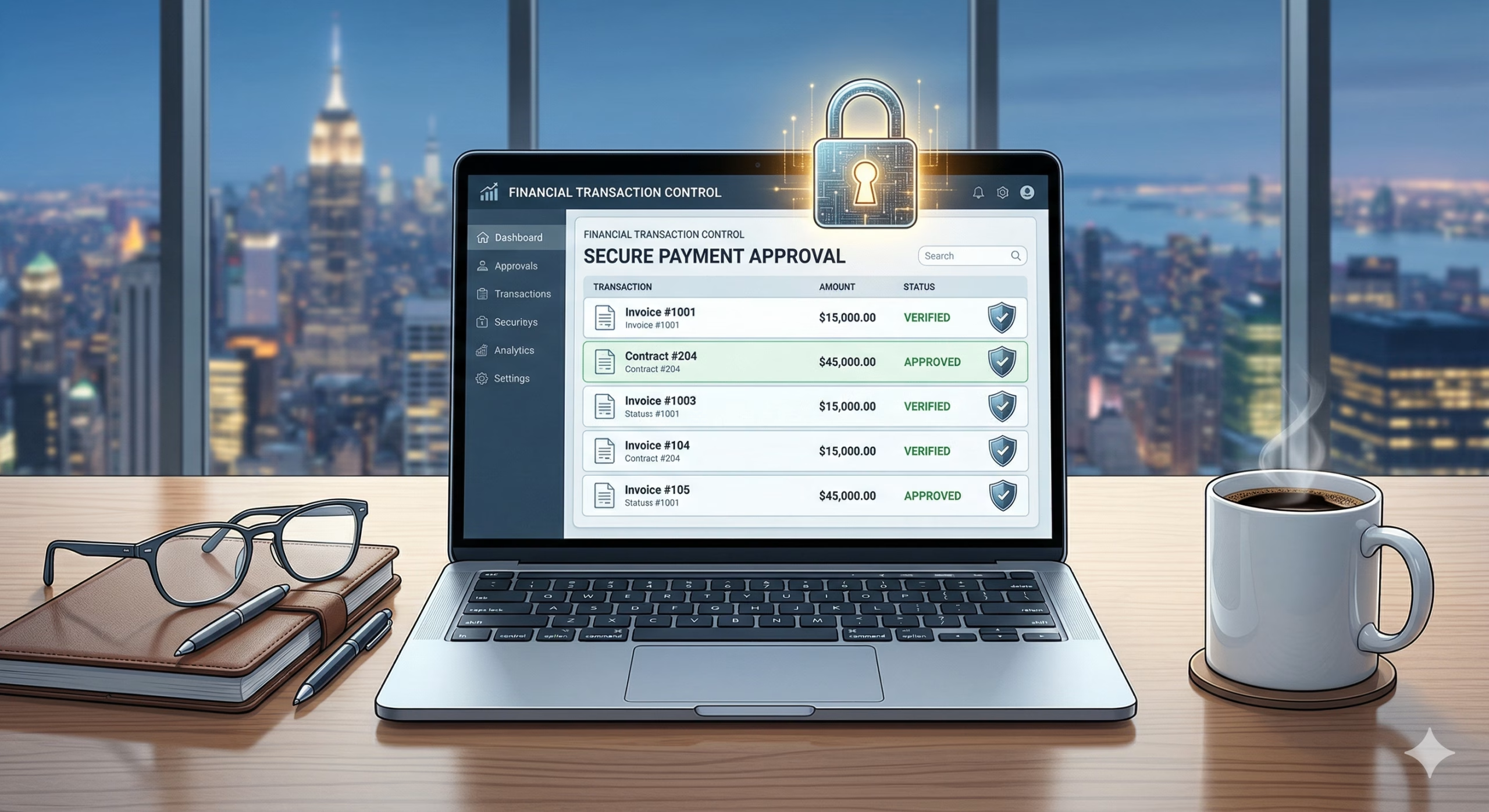
Payment controls are the internal rules and checks that ensure money leaves a business only when it should, for the right reason, and with proper authorisation.
According to the Association for Financial Professionals, 79% of organisations experienced attempted or actual payment fraud in recent years, highlighting how exposed everyday payment processes can be without structured controls in place.
This is why understanding what payment controls are, how they work, and how to apply them in real business settings is no longer optional but a core part of sound financial management.
What Are Payment Controls?
Payment controls are the policies, processes, and checks businesses use to manage how money leaves the organisation.
They define who can request a payment, who must approve it, what documentation is required, and how the transaction is recorded. In simple terms, payment controls ensure that every payment is intentional, accurate, and traceable.
By putting structure around payments, businesses reduce the risk of fraud, limit costly errors, and maintain clear oversight of their finances, no matter how small or large the organisation is.
Who Needs Payment Controls?
Any organisation that makes payments no matter its size or industry needs payment controls.
Once money leaves a business, recovering it can be difficult or impossible. Payment controls help ensure that funds are released deliberately, for the right reasons, and with full accountability.
As businesses grow and payment volumes increase, the need for structured, reliable controls becomes even more critical.
| Business Type | Why Payment Controls are Important |
| Startups | Prevents early-stage cash leakages, enforce discipline, and build strong financial habits from day one. |
| Small Businesses | Reduce errors, avoid unauthorised payments, and maintain better control over limited cash flow. |
| Growing SMEs | Manages increasing transaction volumes while separating duties and improving oversight. |
| Large Enterprises | Controls complex payment workflows, minimise fraud risks, and support audits and compliance. |
| Nonprofits & NGOs | Ensures transparency, donor trust, and proper use of funds across multiple projects. |
| Finance & Accounting Teams | Standardise payment processes, reduce manual stress, and maintain accurate financial records. |
This structure makes it clear that payment controls are not optional but are essential wherever money moves.
Importance of Payment Controls for Businesses Today
In today’s fast-moving, digital-first business environment, payments happen more frequently, through more channels, and often with less manual oversight than ever before.
This makes businesses more exposed to fraud, errors, and cash-flow blind spots.
Strong payment controls help organisations stay in control of their money, reduce financial risk, and maintain trust with stakeholders as operations scale.
| Key Importance Area | Why It Matters for Businesses |
| Fraud Prevention | Payment controls reduce the risk of unauthorised transactions, internal theft, and external payment fraud. |
| Cash Flow Protection | They ensure payments are made accurately and on time, preventing unnecessary cash drain. |
| Error Reduction | Structured checks help avoid duplicate payments, wrong amounts, and incorrect beneficiary details. |
| Financial Risk Management | Payment controls limit exposure to financial losses and strengthen overall risk management. |
| Regulatory and Audit Compliance | Clear approval trails and documentation support audits and regulatory requirements. |
| Operational Efficiency | Well-designed controls streamline payment workflows without slowing down the business. |
| Stakeholder Confidence | Investors, partners, and lenders trust businesses that demonstrate strong financial discipline. |
Without effective payment controls, even profitable businesses can struggle to stay financially stable.
How Payment Controls Work – A Step-by-Step Breakdown
Payment controls work by guiding every outgoing payment through a clear, repeatable process so money does not leave your business on impulse, pressure, or guesswork.
Instead of one person requesting, approving, and paying which is risky, payment controls create checkpoints: a request is raised, documents are reviewed, approvals are granted based on limits, the payment is executed securely, and everything is recorded for tracking and audits.
When done properly, this step-by-step flow reduces fraud, prevents costly errors, and gives the business real visibility over where money is going and why.
Step 1: Payment request is raised
Every controlled payment begins with a formal request. This step creates clarity around why a payment is needed and ensures the business has a clear record before money is even considered for release.
Without a documented request, payments easily become reactive and hard to trace.
| Element of the Request | What It Achieves in Practice |
| Payment purpose | Clearly explains why the money is leaving the business, removing ambiguity. |
| Beneficiary details | Identifies who will receive the funds and reduces the risk of misdirected payments. |
| Amount requested | Sets a fixed reference point for approvals and later reconciliation. |
| Supporting documents | Provides evidence that the payment is valid, not speculative or duplicated. |
| Requested payment date | Helps finance teams plan cash flow and prioritise obligations. |
This stage ensures that no payment exists in isolation. Every transaction starts with context and justification.
Step 2: Documents and details are verified
Once a request is raised, the business must confirm that it is legitimate. Verification is where many frauds attempts and costly errors are stopped.
It also prevents situations where businesses pay for goods not received or services not delivered.
| Verification Area | Why This Check Is Necessary |
| Invoice accuracy | Confirms that amounts, dates, and descriptions are correct. |
| Vendor authenticity | Ensures the payee is an approved and recognised supplier. |
| Duplicate detection | Prevents paying the same invoice more than once. |
| Contract or PO matching | Confirms the payment aligns with agreed terms. |
| Tax and compliance checks | Ensures deductions or statutory requirements are applied correctly. |
This step shifts payment decisions from assumption to evidence.
Step 3: Payment approval follows defined rules
Approval is the control point that separates request from execution. Rather than relying on verbal approvals or seniority pressure, businesses use predefined rules that make approvals consistent and defensible.
| Approval Control | How It Strengthens Financial Discipline |
| Approval limits | Ensures large payments receive higher-level oversight. |
| Multi-level approval | Reduces the risk of unilateral or biased decisions. |
| Role-based authority | Restricts approvals to authorised personnel only. |
| Digital approval trails | Creates a clear record for audits and reviews. |
At this stage, payment controls enforce accountability without slowing the business unnecessarily.
Step 4: Funds availability and timing are confirmed
Even approved payments must align with the business’s cash position. This step protects the organisation from liquidity stress and ensures critical obligations are not compromised by poor timing.
| Cash Review Area | Business Benefit |
| Current bank balance | Confirms the payment is financially feasible. |
| Upcoming obligations | Prevents crowding out payroll or statutory payments. |
| Payment priority | Helps sequence urgent and non-urgent payments logically. |
| Agreed payment terms | Avoids penalties or damaged supplier relationships. |
This step turns payment controls into a practical cash-flow management tool.
Step 5: Payment is executed securely
Execution is where money actually leaves the business.
Strong payment controls ensure that this stage is tightly restricted and protected, especially in digital banking environments where mistakes and fraud can happen quickly.
| Execution Control | Risk It Addresses |
| Dual authorisation | Prevents a single person from releasing funds alone. |
| Access restrictions | Limits payment ability to approved users only. |
| Secure login measures | Reduces exposure to cyber and account takeover risks. |
| Pre-approved beneficiary lists | Prevents last-minute account changes and scams. |
This stage ensures that approval translates into payment without introducing new risks.
Step 6: Payment is recorded and documented
A payment that is not properly recorded might as well not exist. Documentation ensures transparency, supports reporting, and protects the business during audits or disputes.
| Record Type | Purpose |
| Transaction reference | Links bank activity to internal records. |
| Supporting documents | Provides evidence for auditors and management. |
| Ledger classification | Ensures accurate financial reporting. |
| Date and method | Supports reconciliation and cash analysis. |
Good payment controls always leave a clear paper trail.
Step 7: Post-payment review and reconciliation
After payments are made, businesses must confirm that what was approved and recorded matches what actually left the bank.
This step catches errors that slip through earlier controls.
| Reconciliation Focus | Importance |
| Bank statement matching | Confirms all payments are accounted for. |
| Exception identification | Flags anomalies early. |
| Error correction | Allows timely recovery or adjustment. |
| Management oversight | Strengthens confidence in financial reports. |
Reconciliation closes the loop in the payment control process.
Step 8: Exceptions are resolved and controls improved
No system is perfect. What separates strong businesses from weak ones is how they respond when issues arise.
This final step ensures payment controls evolve with experience.
| Improvement Action | Long-Term Impact |
| Investigating failures | Identifies control weaknesses. |
| Updating approval rules | Reduces future exposure. |
| Access reviews | Removes unnecessary privileges. |
| Staff training | Builds a culture of financial discipline. |
This step turns mistakes into stronger systems.
See also: What Is Debt Financing? Types and How It Works in 2026
Types of Payment Controls Used by Businesses
Businesses use different types of payment controls to manage risk at various points in the payment process.
Some controls are designed to stop problems before they happen, while others help detect or correct issues after a payment has been made.
In practice, most organisations rely on a mix of preventive, detective, and corrective payment controls to cover the full payment lifecycle.
1. Preventive Payment Controls
Preventive payment controls are designed to stop problems before money leaves the business. They act as the first line of defence against fraud, unauthorised transactions, and costly payment errors.
By putting clear rules, approvals, and restrictions in place upfront, businesses reduce their exposure to financial loss and limit the need for damage control later.
These controls are especially important in fast-moving environments where payments are frequent and often time-sensitive.
| Preventive Control | How It Works in Practice | Importance |
| Segregation of duties | Different people handle payment requests, approvals, and execution. | Prevents one person from controlling the entire payment process. |
| Pre-approved vendor lists | Payments are made only to verified and authorised suppliers. | Reduces the risk of fake vendors and account substitution fraud. |
| Approval limits and thresholds | Payment amounts determine who must approve them. | Ensures higher-risk payments receive stronger oversight. |
| Mandatory supporting documents | Invoices, contracts, or purchase orders are required before approval. | Stops unsupported or speculative payment requests. |
| Access and permission controls | Only authorised users can create, approve, or release payments. | Limits exposure from internal misuse or compromised accounts. |
| Payment policy enforcement | Clear rules define what can be paid, when, and how. | Creates consistency and reduces ad-hoc decision-making. |
| Bank platform controls | Dual authorisation and transaction limits are enforced at bank level. | Adds an extra layer of protection at the point of execution. |
When preventive payment controls are properly designed, many payment risks never make it past the first stage of the process.
2. Detective Payment Controls
Detective payment controls focus on identifying problems after a payment has been initiated or completed.
Unlike preventive controls, which stop issues upfront, detective controls help businesses spot errors, irregularities, or suspicious activity that slipped through earlier stages.
They are critical for visibility, accountability, and early intervention before small issues turn into major financial losses. These controls work best when applied consistently and reviewed regularly.
| Detective Control | How It Works in Practice | Importance |
| Payment reconciliations | Bank statements are matched against internal payment records. | Helps identify missing, duplicate, or unauthorised payments. |
| Transaction monitoring | Payments are reviewed for unusual amounts, timing, or patterns. | Flags potential fraud or abnormal behaviour early. |
| Exception reports | Systems generate reports for payments outside normal rules. | Draws attention to high-risk or irregular transactions. |
| Audit trails | Detailed logs show who requested, approved, and executed payments. | Supports investigations, audits, and accountability. |
| Management reviews | Finance leaders periodically review payment summaries. | Adds oversight beyond automated checks. |
| Vendor statement reviews | Supplier statements are compared with internal records. | Confirms accuracy and prevents overpayments. |
Detective payment controls ensure that even when mistakes happen, they do not go unnoticed or unresolved.
3. Corrective Payment Controls
Corrective payment controls come into play after an issue has been identified. Their role is not just to fix what went wrong, but to ensure the same mistake, weakness, or fraud does not happen again.
These controls close the gap between detection and long-term improvement, turning payment failures into learning points for the business.
Strong corrective controls are a sign of financial maturity. They show that a business does not ignore errors but responds, adapts, and strengthens its systems.
| Corrective Control | How It Works in Practice | Importance |
| Payment reversals and recoveries | The business acts quickly to reverse or recover incorrect payments. | Minimises financial loss when errors occur. |
| Root-cause analysis | Teams investigate how and why the issue happened. | Prevents repeat mistakes instead of treating symptoms. |
| Policy and process updates | Payment rules are revised based on identified weaknesses. | Keeps controls relevant as the business evolves. |
| Approval rule adjustments | Limits or approval levels are tightened where needed. | Reduces exposure in high-risk payment areas. |
| Access reviews and removals | User permissions are reviewed and adjusted after incidents. | Prevents misuse of payment authority. |
| Staff retraining | Employees receive guidance based on real issues encountered. | Strengthens awareness and accountability across teams. |
| System configuration changes | Payment systems are reconfigured to block similar errors. | Embeds lessons learned directly into workflows. |
Corrective payment controls ensure that problems do not simply get fixed, but they get fixed properly, making the overall payment control framework stronger over time.
See also: 10 Rules for Using a Business Credit Card Wisely and Avoiding Debt
Common Payment Control Mechanisms
Payment control mechanisms are the practical tools and rules businesses use to enforce payment controls on a day-to-day basis.
While policies define what should happen, these mechanisms determine how it actually happens when payments are requested, approved, and processed.
When applied consistently, they reduce reliance on trust alone and replace it with structure, accountability, and clear financial discipline across the organisation.
Segregation of Duties
Segregation of duties means no single person controls an entire payment from start to finish. One person raises the payment request, another approves it, and a different person releases the funds.
This separation reduces the risk of fraud, manipulation, and “silent” errors. Even in small businesses, splitting responsibilities, however lightly, creates accountability and discourages abuse.
Approval Limits and Thresholds
Approval limits define how much authority each role has when approving payments.
For example, a manager may approve smaller expenses, while larger payments require senior management or finance approval.
These thresholds ensure that higher-value or higher-risk payments receive closer scrutiny, without slowing down routine transactions.
Vendor and Beneficiary Controls
Vendor and beneficiary controls restrict payments to verified and approved recipients.
Businesses maintain a vetted list of suppliers and require formal checks before any bank details are added or changed.
This mechanism is critical for preventing payment diversion fraud, where criminals attempt to redirect funds by changing account details.
Payment Scheduling and Timing Controls
Payment scheduling controls determine when payments are released.
Instead of paying everything immediately, businesses align payments with due dates, cash availability, and priority levels.
This improves cash flow management, avoids unnecessary early payments, and ensures critical obligations such as payroll or taxes are never compromised.
Access and Permission Controls
Access controls define who can view, create, approve, or execute payments within banking platforms and payment systems. Permissions are assigned based on roles, not convenience.
This mechanism limits exposure if an account is compromised and ensures staff only access what they genuinely need to do their jobs.
Dual Authorisation (Maker–Checker Control)
Dual authorisation requires at least two people to complete a payment. One to prepare it and another to approve or release it.
Commonly enforced by banks and payment platforms, this control adds a powerful layer of protection at the final stage, where money actually leaves the business.
Mandatory Documentation Controls
This mechanism requires supporting documents such as invoices, contracts, or purchase orders before a payment can be approved.
It prevents “verbal” or pressure-driven payments and ensures every transaction has a clear business justification. Over time, it also creates strong audit and reporting records.
Audit Trails and Activity Logs
Audit trails automatically record who requested, approved, modified, and executed each payment.
These logs make payments traceable and transparent. When questions arise, whether from management, auditors, or regulators, the business can clearly show how decisions were made.
System-Based Rules and Automation Controls
Modern payment control systems embed rules directly into software.
These rules block unauthorised actions, flag exceptions, and enforce approval workflows automatically.
Automation reduces human error, improves consistency, and allows businesses to scale payments without weakening control.
Conclusion
Payment controls are not just a finance function; they are a business survival tool. When done right, they protect cash, reduce risk, and bring discipline to how money moves out of the business.
For entrepreneurs, the goal is simple: put clear rules in place, use the right checks, and strengthen controls as the business grows. Strong payment controls today prevent costly problems tomorrow.
Leave a Reply